Blown-In Insulation in El Segundo, CA
Energy-Saving Blown-In Insulation in El Segundo, CA for El Segundo, CA Homes — Licensed & Insured
Need blown-in insulation in El Segundo, CA? Cool Zone Insulation offers expert loose-fill attic & wall insulation for coastal South Bay homes. Call 310-861-9135.
Blown-in insulation is a modern insulation method that involves mechanically blowing loose-fill material — typically cellulose or fiberglass — into wall cavities, attic spaces, and other hard-to-reach areas of your home or commercial building. Unlike traditional batt insulation, blown-in insulation conforms to irregular surfaces, fills gaps around existing structures, and delivers consistent thermal performance across every square foot of coverage.
In El Segundo, CA, where coastal marine layer conditions, salt-laden air, and proximity to Los Angeles International Airport create unique thermal and acoustic challenges, proper insulation is not a luxury — it is a necessity. Cool Zone Insulation is your local professional insulation contractor serving El Segundo residents and business owners with expert blown-in insulation solutions tailored to the specific demands of this coastal South Bay community. Whether you own a mid-century bungalow near Eucalyptus Park or a modern commercial property near the aerospace corridor, our team delivers results built for El Segundo’s environment.
Understanding Blown-In Insulation
Blown-in insulation — also referred to as loose-fill insulation — has been used in residential and commercial construction since the early twentieth century, though modern mechanized blowing equipment and engineered insulation materials have dramatically improved its effectiveness and ease of installation over the past three decades.
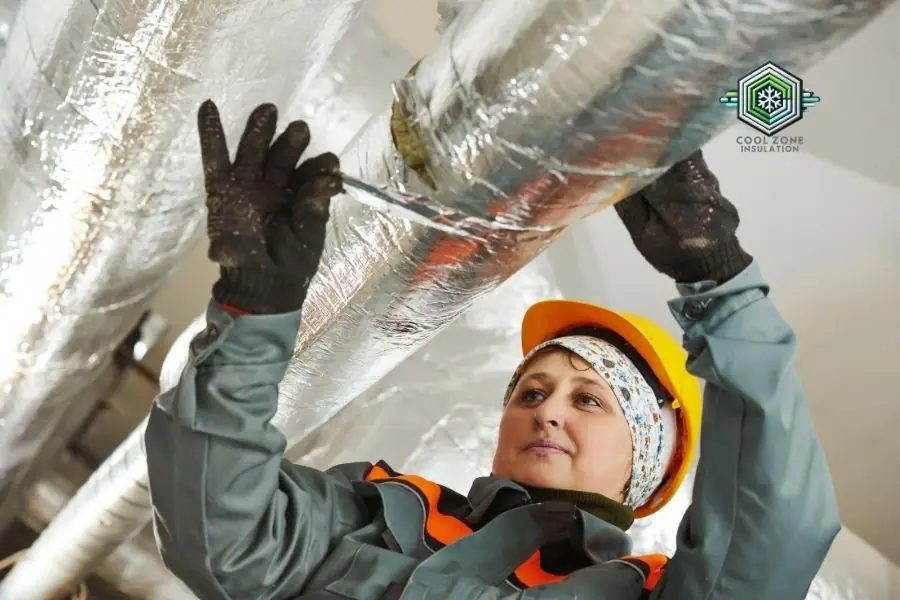
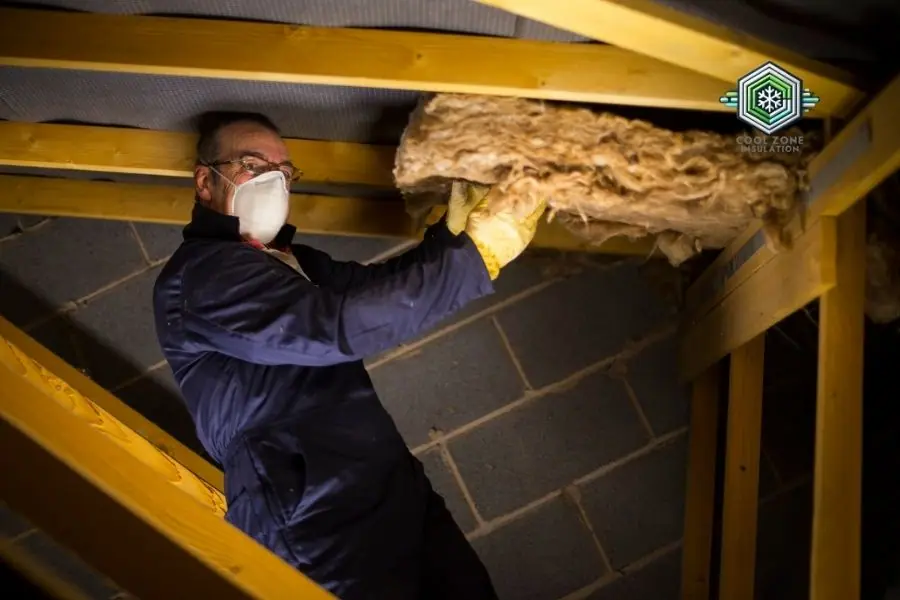
The process works by using a specialized blowing machine connected to a long flexible hose. An insulation technician feeds loose-fill material into the hopper while a second technician guides the hose into the target area — typically an attic floor, a wall cavity through small access holes, or a crawl space ceiling. The material expands as it exits the hose and fills every contour, corner, and irregularity it encounters.
There are two primary materials used in blown-in insulation installations:
- Cellulose: Made from recycled paper products treated with borate fire retardants, cellulose is an eco-friendly option with excellent thermal resistance. At a settled R-value of approximately R-3.2 to R-3.8 per inch, it is a cost-effective choice for attic insulation upgrades and is particularly good at dampening sound — a major consideration in El Segundo given airport proximity.
- Fiberglass Loose-Fill: Produced from spun glass fibers, loose-fill fiberglass offers an R-value of approximately R-2.2 to R-2.7 per inch, resists moisture absorption, and does not settle as significantly as cellulose over time. It is well-suited for El Segundo’s marine-influenced humidity levels.
El Segundo’s building stock is particularly well-suited to blown-in insulation upgrades. The city’s housing inventory is dominated by post-World War II construction — the 1940s through 1960s building boom that accompanied the growth of local aerospace and aviation industries. These homes were built with minimal insulation by today’s standards, and many have narrow stud cavities, irregular framing, and existing electrical runs that make blown-in installation far more practical than pulling out walls for batt replacement.
Commercial properties along Sepulveda Boulevard and in the Douglas Street business corridor similarly benefit from retroactive blown-in insulation because the method minimizes disruption to ongoing operations while achieving significant improvements in energy efficiency and occupant comfort.
Understanding the R-value requirements specific to Climate Zone 6 — the California Energy Commission designation for El Segundo — is essential. The current Title 24 standards recommend attic insulation of at least R-38 for existing homes and R-49 for new construction, levels that blown-in insulation can achieve efficiently and cost-effectively. Learn more about our attic insulation services
Why Blown-In Insulation Is Needed in El Segundo, CA
The Marine Layer Effect
The Southern California marine layer — a dense stratum of cool, moist air that rolls in from the Pacific Ocean — is particularly pronounced in El Segundo. Measured temperature differentials between morning marine layer conditions and afternoon inland-pushed warmth can swing 20 to 30 degrees Fahrenheit within a single day during the late spring and summer months. This daily thermal cycling stresses building envelopes, encourages moisture infiltration, and continuously challenges under-insulated attics and wall cavities. Homes on the western side of El Segundo — particularly those within the streets between Pacific Coast Highway and Vista del Mar — experience the heaviest marine layer exposure and correspondingly greater insulation needs.
Salt Air Corrosion and Moisture Concerns
The Pacific Ocean sits less than half a mile from much of El Segundo’s residential neighborhood. Salt-laden coastal air is a persistent environmental factor that accelerates corrosion in HVAC systems and degrades poorly protected insulation materials. Older fiberglass batt insulation installed in the 1970s and 1980s can absorb moisture, lose loft, and provide dramatically reduced thermal performance over time. Blown-in cellulose treated with borate compounds and dense-pack fiberglass resist moisture absorption better and maintain their rated R-value through El Segundo’s year-round coastal humidity.
LAX Acoustic Impact Zone
El Segundo is located directly beneath and immediately adjacent to the primary flight paths serving Los Angeles International Airport, one of the busiest airports in North America handling over 88 million passengers annually as of pre-pandemic 2019 figures. Noise contour maps published by Los Angeles World Airports place significant portions of El Segundo within the 65 dB Community Noise Equivalent Level zone — the threshold at which noise is considered a significant impact on residential quality of life. Dense-pack blown-in cellulose insulation in attic spaces and wall cavities provides meaningful sound transmission reduction alongside its thermal benefits, making it particularly valuable in neighborhoods like the Richmond Street corridor and the streets north of El Segundo Boulevard nearest the airport.
Aging Housing Stock
The City of El Segundo’s residential neighborhood was substantially built out between 1940 and 1965 to house workers at nearby aerospace facilities including the original Douglas Aircraft plant — now Boeing — and Northrop. These homes, many of them craftsman-influenced post-war bungalows and early ranch-style homes, were built with minimal insulation compared to current California Title 24 standards. Many El Segundo homes built before 1970 have either no attic insulation or original blown-in material from the 1970s energy crisis era that has since settled, compacted, or become moisture-damaged to the point of ineffectiveness.
Energy Cost Pressures
Southern California Edison, the primary utility serving El Segundo, has implemented rate increases that make energy efficiency improvements increasingly financially meaningful. An under-insulated El Segundo home can lose 25 to 40 percent of its conditioned air through the attic alone during peak cooling demand periods in July and August. Upgrading to blown-in insulation at the recommended R-38 attic coverage level consistently delivers measurable utility bill reductions for El Segundo homeowners.
Free, no-obligation estimates
Talk to Cool Zone Insulation
Tell us what you need and we’ll take it from there.
Signs You Need Blown-In Insulation in El Segundo
Energy Performance Indicators
- Monthly Southern California Edison bills that spike significantly during July and August even with moderate air conditioning use
- HVAC system running continuously during mild weather without achieving the thermostat setpoint
- Rooms that are noticeably warmer or cooler than adjacent spaces despite closed doors
- Visible heat signatures around attic hatch covers or drop-down stair openings
Physical and Structural Symptoms
- Attic insulation depth of less than 10 inches — insufficient to meet California’s R-38 minimum for existing homes
- Visible gaps, voids, or compressed areas in existing batt insulation when viewed from the attic
- Moisture staining on attic floor decking or rafters, indicating condensation from inadequate thermal separation
- Original pink or yellow fiberglass batts that have turned gray or brown from airborne particulate accumulation
Comfort and Acoustic Concerns
- Clearly audible aircraft noise from LAX inside bedrooms with windows closed
- Morning cold drafts that persist well past sunrise during the coastal marine layer season from May through September
- Ice plant or condensation visible on interior window surfaces during cool coastal nights
Urgency Indicators
If you notice musty odors from your attic, visible rodent evidence, or existing insulation that is wet or clumped, immediate professional assessment is essential. These conditions suggest insulation that is actively harming rather than helping your home. Learn about our insulation removal services
Blown-In Insulation Methods and Approaches
Open-Blow Attic Installation
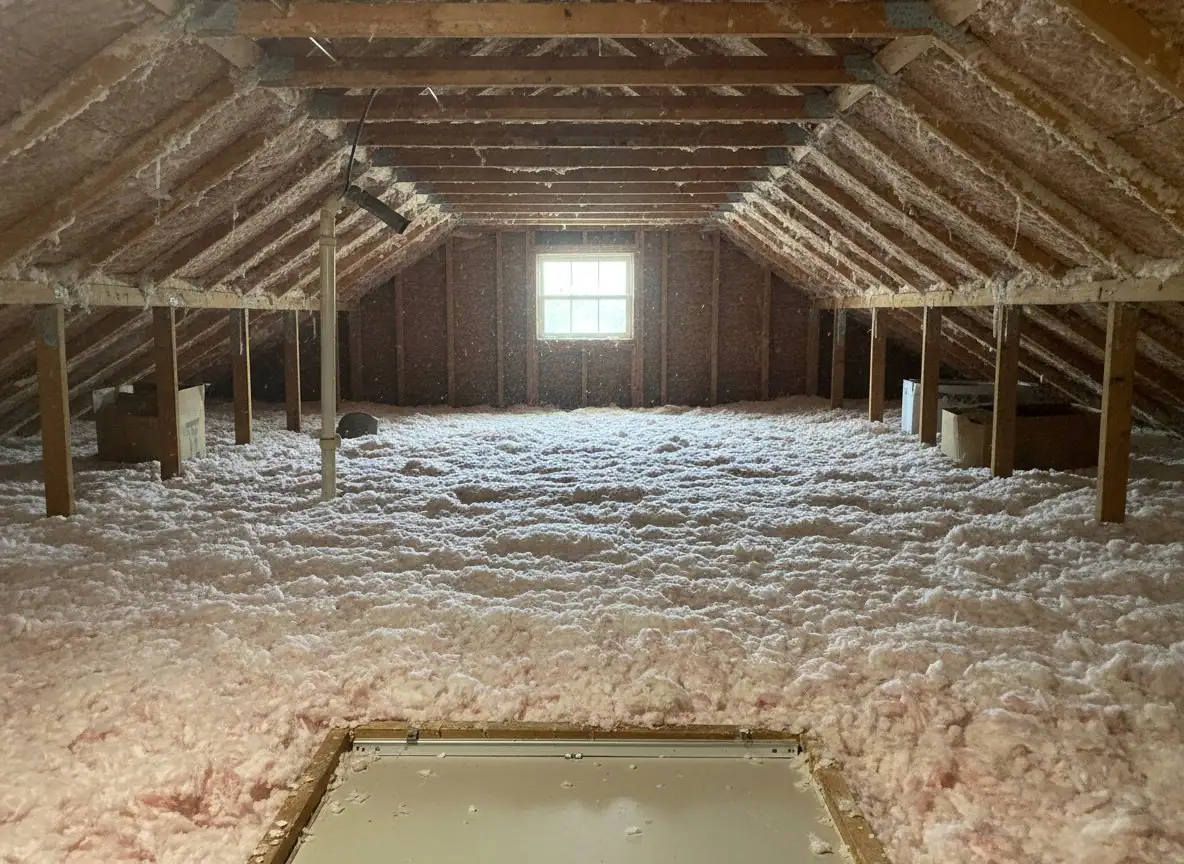
The most common method used in El Segundo’s post-war bungalows and ranch homes, open-blow installation simply involves blowing loose-fill material across the open attic floor to the required depth. This method is fast, cost-effective, and ideal for attics with clear access and adequate head clearance. For El Segundo homes targeting R-38, this typically means installing approximately 10 to 12 inches of cellulose or 14 to 16 inches of fiberglass loose-fill over existing insulation or a clean attic floor.
Dense-Pack Wall Cavity Installation
Dense-pack blown-in insulation fills existing wall cavities through small drilled access holes — either from the exterior (through siding) or interior (through drywall). The material is injected at high density to prevent future settling. This method is particularly appropriate for El Segundo’s older homes that were built with minimal or no wall insulation and provides meaningful acoustic dampening against LAX aircraft noise.
Blow-In Blanket System (BIBS)
Used primarily in new construction or during major remodels, the BIBS method involves installing a fabric netting across open stud bays before blowing fiberglass insulation behind it at high density. This creates a uniform, high-performance wall insulation layer. Several El Segundo homeowners undertaking significant renovations to their mid-century properties have chosen BIBS to bring wall insulation up to modern performance standards.
Stabilized or Spray-Applied Cellulose
For sloped roof decks, cathedral ceilings, or areas where loose-fill would not stay in place, we apply a light water spray that activates the natural adhesive properties of the cellulose fiber, allowing it to adhere to vertical and overhead surfaces until it dries in place. This approach is occasionally used in El Segundo’s older homes with non-standard attic configurations. Explore spray foam insulation as an alternative for sealed attic applications
Blown-In Insulation Cost in El Segundo, CA
Understanding the cost of blown-in insulation in El Segundo helps homeowners and property managers plan their insulation investment accurately. Pricing varies based on several factors specific to the El Segundo market.
Typical Price Ranges
- Attic blown-in insulation (open-blow): $1.50 to $3.00 per square foot installed, including materials and labor. A typical 1,200 square foot El Segundo bungalow attic runs approximately $1,800 to $3,600 for a complete blown-in upgrade to R-38.
- Dense-pack wall cavity insulation: $2.50 to $4.50 per square foot of wall area, reflecting the additional labor involved in drilling and patching access holes. A full exterior wall dense-pack for a 1,500 square foot El Segundo home typically ranges from $3,000 to $6,500.
- Combined attic and wall projects: $4,500 to $9,000 for a comprehensive blown-in upgrade of a typical El Segundo single-family residence.
Read moreShow less
Factors Affecting Cost in El Segundo
- Existing insulation removal: If damaged, moisture-affected, or rodent-contaminated insulation must be removed first, expect to add $1.00 to $2.00 per square foot. Learn about our insulation removal services
- Attic accessibility: Low-clearance attics common in El Segundo’s 1950s ranch homes require more labor time and increase costs modestly.
- Air sealing scope: Homes with significant bypass penetrations require additional air sealing labor before blown-in installation.
- Material selection: Cellulose is generally 10 to 15 percent less expensive than fiberglass loose-fill for comparable R-value installations.
Available Rebates
Southern California Edison’s Energy Efficiency programs offer rebates of up to $0.10 to $0.20 per square foot for qualifying attic insulation upgrades. SoCalGas may also offer rebates for homes with gas heating systems. Our team provides the required Certificate of Insulation documentation needed to apply for these rebates.
Call 310-861-9135 for a free, no-obligation estimate specific to your El Segundo property.
El Segundo Neighborhoods We Serve
The El Segundo Residential Neighborhood
The core residential grid — bounded by Sepulveda Boulevard to the east, Vista del Mar to the west, El Segundo Boulevard to the north, and Imperial Avenue to the south — contains the majority of El Segundo’s housing stock. Most homes here date from the 1940s through 1960s and were built with minimal insulation. Dense-pack wall cavity and open-blow attic blown-in insulation are our most common services in this area. The western streets nearest the beach face the strongest marine layer exposure and acoustically challenging LAX approach patterns.
The Smoky Hollow Area
Smoky Hollow, El Segundo’s historic light industrial district, has seen significant adaptive reuse and live-work conversion activity. These converted structures often require dense-pack insulation retrofits to meet residential comfort and energy code standards for their new uses.
Campus El Segundo and the Corporate Campus Zone
The commercial and corporate campus area east of Sepulveda includes modern office buildings and mixed-use developments, some of which benefit from blown-in insulation in dropped ceiling plenum spaces and interior wall cavities for energy performance and acoustic separation between tenant spaces.
The Streets Near Eucalyptus Park
The mid-century homes surrounding Eucalyptus Park represent some of El Segundo’s most beloved residential streets. Many of these homes have been lovingly maintained but carry original 1950s-era insulation that has long since passed its effective service life. Learn about our attic cleaning services to prepare for new insulation
Blown-In Insulation Maintenance Tips for El Segundo Homeowners
- Inspect attic insulation depth annually: Use a ruler or depth stick to spot-check insulation depth in several attic locations each fall before the rainy season. California’s minimum of R-38 requires roughly 10 to 12 inches of settled cellulose.
- Check for moisture after winter rains: El Segundo receives an average of 12 inches of annual rainfall, primarily between November and March. After significant rain events, inspect accessible attic areas for any sign of moisture intrusion or wet insulation.
- Keep attic ventilation clear: Ensure soffit vents along eave overhangs are not blocked by blown-in material. Proper ventilation prevents moisture buildup specific to El Segundo’s coastal humidity environment.
- Seal attic access hatches: Attic hatches are major thermal bypass points. Weatherstrip and insulate your attic hatch cover to prevent conditioned air loss.
- Monitor for rodent evidence: El Segundo’s location near open coastal land means occasional rodent pressure. Check attic spaces seasonally for droppings or nesting. Learn about our rodent proofing services
- Avoid compressing insulation: Do not walk on blown-in insulation or store items directly on it in the attic. Compression reduces R-value significantly.
- Schedule professional assessments every five to seven years: Even well-installed blown-in insulation benefits from periodic professional evaluation, especially after significant weather events or HVAC system changes.
Why Choose Cool Zone Insulation for Blown-In Insulation in El Segundo
Cool Zone Insulation is a professional insulation contractor focused exclusively on serving communities across the South Bay and greater Los Angeles area. Our technicians understand the specific challenges that El Segundo’s coastal location, aging housing stock, and unique acoustic environment present — and we bring that local knowledge to every project we complete.
We install blown-in insulation using calibrated equipment that ensures consistent coverage depth and density throughout your attic or wall cavities. Every project includes pre-installation air sealing, compliance with California Title 24 standards, and complete Certificate of Insulation documentation for utility rebate applications.
Read moreShow less
Our comprehensive service menu means we handle every aspect of your insulation project — from initial assessment through insulation removal, attic cleaning, rodent proofing, and new installation. You work with one trusted team throughout the entire process rather than coordinating multiple contractors. Explore our full attic insulation services Learn about fiberglass insulation options
We serve El Segundo homeowners, property managers, and commercial clients with equal commitment to quality workmanship and clear, honest communication. Call us at 310-861-9135 to experience the Cool Zone Insulation difference.
FAQ
Frequently Asked Questions About Blown-In Insulation in El Segundo, CA
How much does blown-in insulation cost in El Segundo, CA?
For a typical El Segundo single-family home, attic blown-in insulation costs between $1.50 and $3.00 per square foot installed. A 1,200 square foot attic upgraded to California’s recommended R-38 level typically costs between $1,800 and $3,600 depending on current insulation conditions, accessibility, and material choice. Dense-pack wall insulation costs more, ranging from $2.50 to $4.50 per square foot of wall area. Contact us at 310-861-9135 for a free site-specific estimate.
How long does blown-in insulation installation take in El Segundo?
Most El Segundo attic blown-in insulation projects are completed in a single day. A typical 1,000 to 1,500 square foot attic takes approximately four to six hours from equipment setup through final inspection and cleanup. Dense-pack wall cavity projects may take one to two days depending on the number of exterior walls being treated.
Is blown-in insulation effective at reducing LAX aircraft noise?
Yes. Dense-pack cellulose blown-in insulation provides meaningful improvement in Sound Transmission Class performance. While no insulation system completely eliminates exterior noise, adding blown-in cellulose to attic spaces and wall cavities in homes under LAX flight paths can meaningfully reduce interior noise levels compared to under-insulated conditions. This is one reason we frequently recommend cellulose over fiberglass loose-fill for El Segundo properties near the airport approach corridors.
Does El Segundo’s coastal humidity affect blown-in insulation performance?
Moisture management is an important consideration for El Segundo homes. We recommend fiberglass loose-fill or borate-treated cellulose with proper attic ventilation for coastal El Segundo applications. Both materials resist moisture absorption well when properly installed. We also conduct thorough air sealing before installation to minimize the pathways through which moist coastal air can enter the building envelope and contact insulation materials.
How do I know if my El Segundo home needs blown-in insulation?
If your home was built before 1980, it almost certainly has insufficient attic insulation by current California standards. Other indicators include high summer utility bills with Southern California Edison, uneven room temperatures, clearly audible LAX aircraft noise inside closed rooms, or visible attic insulation that appears compressed, gray, or sparse. Our free assessment will give you a definitive picture of your current insulation status.
Can blown-in insulation be added over existing insulation in my attic?
In most cases, yes. If existing insulation is dry, undamaged by rodents, and free of mold, blown-in insulation can be added on top to bring total coverage to the recommended depth. We assess existing conditions during our initial visit and advise on whether remediation or removal is necessary before new insulation is added. Learn more about when insulation removal is recommended
Does Cool Zone Insulation serve commercial properties in El Segundo?
Yes. We serve commercial property owners, building managers, and business operators throughout El Segundo including properties along Sepulveda Boulevard, in the Smoky Hollow district, and within the Campus El Segundo corporate zone. Commercial blown-in insulation projects are scheduled to minimize disruption to ongoing business operations.
What R-value do I need for my El Segundo home?
The California Energy Commission places El Segundo in Climate Zone 6. For existing homes, the minimum recommended attic insulation level is R-38. For new construction or major additions, R-49 is the current Title 24 standard. Our technicians calculate the required installed depth of blown-in material to achieve your target R-value accounting for material settling over time.
Get Your Free Blown-In Insulation Estimate in El Segundo Today
Whether you are dealing with high energy bills, uncomfortable rooms, excessive aircraft noise from LAX, or simply know your post-war El Segundo home is overdue for an insulation upgrade, Cool Zone Insulation is ready to help. Our professional team brings local expertise, quality materials, and honest pricing to every blown-in insulation project we complete in El Segundo.
Do not let another California coastal summer pass with an under-insulated home working against your comfort and your budget. Contact Cool Zone Insulation today for your free, no-obligation blown-in insulation assessment and written estimate.
We serve all of El Segundo and surrounding South Bay communities. Our team is ready to answer your questions, schedule your assessment, and get your project moving quickly.
Schedule your free insulation assessment online
Get in touch
Find insulation help near you
Request a free estimate online or give us a call — our team will follow up quickly.
- Call us(310) 861-9135
- Visit2333 Utah Ave, El Segundo, CA 90245
- HoursMon-Sun 07:00-19:00